From Screen to Skillet: The Real-Life Recipes Behind Anime's Most Cravable Meals
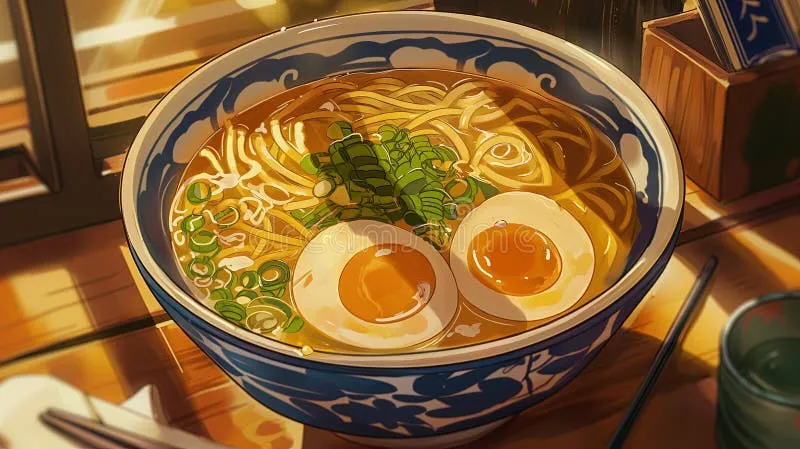
Photo: anime themed ramen bowl homemade cooking, via thumbs.dreamstime.com
There's a moment in almost every Studio Ghibli film that fans know by heart: someone cooks, someone eats, and suddenly you're starving. The bacon and eggs in Castle in the Sky, the ramen in Ponyo, the bento boxes scattered across a dozen films — none of it is complicated food, and yet it all looks better than anything you've ever pulled out of your own oven.
That gap between the screen and your kitchen is exactly where a small internet industry has grown up.
Why Animated Food Looks Better Than Your Dinner
Animators cheat, and they cheat beautifully. Real food reflects light in messy, inconsistent ways. Drawn food doesn't have to obey physics — steam curls in perfect spirals, sauces catch a highlight that real soy sauce never would, and every slice of pork in the ramen bowl sits at the exact angle that reads as 'juicy.'
Food Wars took this to its logical extreme, turning every bite into a full-blown psychedelic sequence. But even quieter shows — slice-of-life series like Laid-Back Camp with its instant noodle upgrades, or Sweetness and Lightning with its homemade cooking — treat meals as emotional punctuation. When a character eats well, you feel it.
American audiences noticed. And then they started cooking.
The Recreators
Scroll TikTok long enough and you'll find someone deconstructing the egg custard from a Ghibli film or rebuilding the omurice from Yuru Camp panel by panel. YouTube channels dedicated entirely to anime recipe recreations have racked up millions of views, and the format is simple enough to explain the appeal: here's the shot from the show, here's the real thing, here's how to bridge the gap.
What's interesting is how faithful these recreations tend to be. Unlike 'movie-inspired' recipes in Western media — which often just slap a name on an ordinary dish — anime food is usually grounded in real Japanese home cooking. Onigiri, nikujaga, curry rice, tamagoyaki. The animation was already depicting real food, so the recreators aren't inventing anything. They're recovering it.
That's part of why the trend has legs. A fan can actually make the dish, and it will actually taste good, because a grandmother in Osaka has been making a version of it for decades.
Restaurants Are Catching On
It's not just home kitchens anymore. Pop-up events built around Ghibli-style menus sell out in cities like Los Angeles and New York. Themed cafés — a long-standing Tokyo tradition, from the Pokemon Café to character-themed restaurants in Ikebukuro — have started inspiring American imitators, some official and some very much not.
Even chains have taken notice. Anime collaborations with American fast food have become a reliable marketing play, and limited-edition menu items tied to a series drop now generate the same kind of online frenzy that sneaker releases used to.
There's a debate simmering underneath all of this, of course. Is a themed menu a celebration or a cash grab? The honest answer is probably both — but when the food is genuinely good, and when it sends curious viewers down the road toward actual Japanese cooking, that feels like a trade worth making.
Start With the Bowl That Started It All
If you want to try this yourself, skip the complicated stuff first. The anime food that hits hardest emotionally is almost always the simplest: rice with something on it, a good soup, an egg done right. Buy decent short-grain rice. Learn one pickle. Make the ramen from Ponyo — it's literally just instant noodles, half a boiled egg, sliced scallions, and a slice of ham, arranged with love.
That's the secret the animators understood all along. The food was never fancy. It was just drawn like someone cared about it.