Falling for Fiction: How the Anime Character Romance Industry Turned Longing Into a Billion-Dollar Business
Let's start with a number: the global market for anime merchandise — figures, dakimakura, character goods, and the various products designed to deepen your relationship with a fictional person — is projected to exceed $50 billion by 2030. A meaningful chunk of that growth is being driven by American consumers. And a significant portion of that is being spent by people who have genuine, sustained emotional attachments to characters who don't exist.
This is not a niche phenomenon. It is not a punchline. And it is absolutely worth understanding.
What We Actually Mean by 'Anime Boyfriend'
The phrase "anime boyfriend" started as a half-joking way to describe an intense fan attachment to a male character — your Levi Ackermans, your Kakashi Hatakes, your Satoru Gojos. But the behavior it describes is real and runs a lot deeper than a cute Twitter bio.
Fans build playlists their favorite character would theoretically enjoy. They buy merchandise not just as collectibles but as a form of daily companionship — a figure on a desk, a keychain on a bag, a phone case that features a face they find comfort in. Some purchase relationship simulation games specifically to experience a version of romantic intimacy with a character they already love from an existing series. Others commission fan art that imagines shared domestic scenarios.
At its most intense, the phenomenon includes what Japan calls nijikon — a genuine romantic or emotional orientation toward two-dimensional characters — and the small but real community of people who have held formal marriage ceremonies with fictional characters, sometimes in dedicated spaces in Japan that cater to exactly this.
"It sounds extreme when you describe it clinically," says Dr. Rachel Ames, a therapist based in Austin who works with young adults and has studied parasocial relationships. "But when you actually sit with someone and understand what they're getting from these attachments — safety, consistency, a relationship that doesn't disappoint them — it becomes a lot less alien. It's an emotional response to real needs."
The Design Is Not an Accident
Here's the part that tends to make people uncomfortable: the emotional pull isn't just happening organically. It's being engineered.
Japanese media companies — and increasingly their American licensing partners — have become extraordinarily sophisticated at designing characters for maximum attachment. This involves specific visual language (the "gap moe" technique, where a tough exterior conceals unexpected softness), carefully constructed backstories that invite protectiveness or empathy, and behavioral archetypes that research has shown produce strong emotional responses in particular demographics.
Dating simulation games, or otome games — a genre aimed primarily at women that has exploded in Western markets — take this further. Titles like Obey Me!, Ikemen Sengoku, and Mystic Messenger use variable reinforcement schedules, personalized dialogue, and real-time notification systems to create a rhythm of interaction that psychologists describe as functionally similar to the dynamics of a real relationship. You log in, your character greets you, remembers your name, expresses that they missed you. The emotional circuitry that fires in response doesn't particularly care that the character is rendered in cel-shaded 2D.
"These games are genuinely well-designed from a behavioral psychology standpoint," notes Marcus Webb, a UX researcher in San Francisco who has studied engagement patterns in mobile games. "The mechanics that create attachment in a dating sim and the mechanics that create attachment in a social app are not that different. The main distinction is that one is upfront about being fiction."
The Market That Grew Up Around Longing
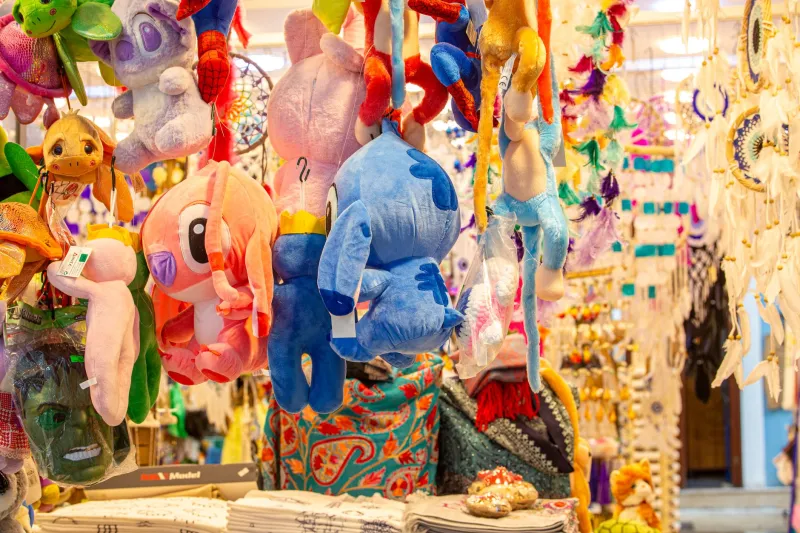
The commercial infrastructure serving these attachments is enormous and still expanding. High-end character figures from companies like Good Smile can run $200 to $500 per item and routinely sell out within minutes of preorder windows opening. The secondary market on platforms like Mercari and eBay marks them up by multiples. Body pillows featuring popular characters — dakimakura — have become mainstream enough that mainstream retailers stock them.
Then there's the merchandise long tail: themed cafes in major US cities, character birthday events at anime conventions, officially licensed "date experience" audio content where a voice actor performs as a character spending time with the listener. The intimacy economy around anime characters is genuinely creative in the products it generates.
American fans have also built their own parallel economy. Fan-made goods on Etsy — character keychains, prints, plushies — generate significant revenue for independent creators, sometimes in legally gray territory, but with enough cultural acceptance that even official IP holders often look the other way because the fan economy functions as free advertising.
The Loneliness Question
It would be easy to frame all of this as exploitation — corporations identifying lonely people and selling them a substitute for human connection. That framing isn't entirely wrong, but it's also not the whole story.
For many fans, the attachment to fictional characters exists alongside healthy human relationships, not instead of them. Fan communities built around shared affection for characters are genuinely social spaces — people make real friends at conventions, in Discord servers, through collaborative fan projects. The character is sometimes more of a shared language than a replacement for human intimacy.
For others, particularly people who are neurodivergent, socially anxious, or navigating periods of isolation, the consistency and safety of a fictional relationship provides something that real social interaction feels too risky or exhausting to offer. Therapists are divided on whether this is adaptive coping or avoidance behavior — and the honest answer is probably that it depends entirely on the individual.
"I don't think there's a universal verdict here," Dr. Ames told us. "The same behavior can be healthy for one person and a barrier for another. What I'd push back on is the reflexive mockery. These are people with real emotional lives, using the tools available to them."
The Bigger Picture
What the anime character romance economy ultimately reflects is something broader about how American pop culture consumption has shifted. We don't just watch stories anymore — we inhabit them, personalize them, build identities around them. The line between fan and participant has been dissolving for years, and Japanese media, with its decades-long tradition of designing for deep emotional engagement, arrived perfectly positioned to serve that shift.
Whether you find it sweet, strange, or somewhere in between, the numbers make one thing clear: a lot of people are finding something meaningful in these fictional relationships. And the industry built around that meaning isn't slowing down anytime soon.
Somewhere right now, someone is logging into a dating sim after a long day, and a character is telling them they've been waiting. The emotional response that produces is real, even if the character isn't. That tension — between fiction and feeling — is exactly where this entire economy lives.